

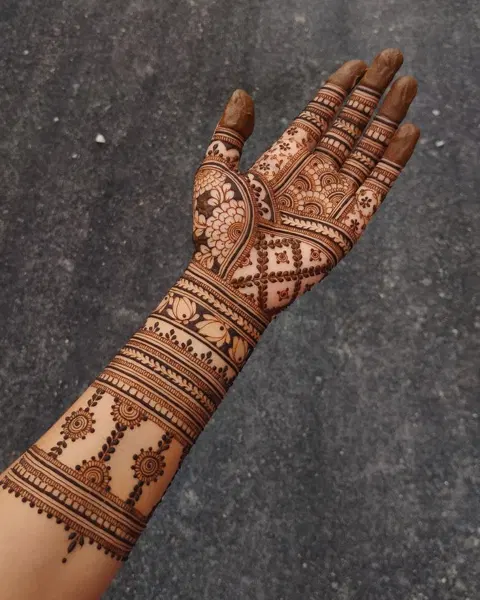
Learn it
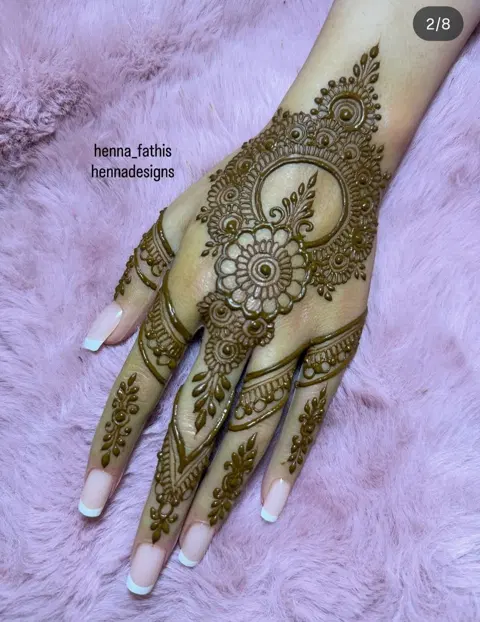
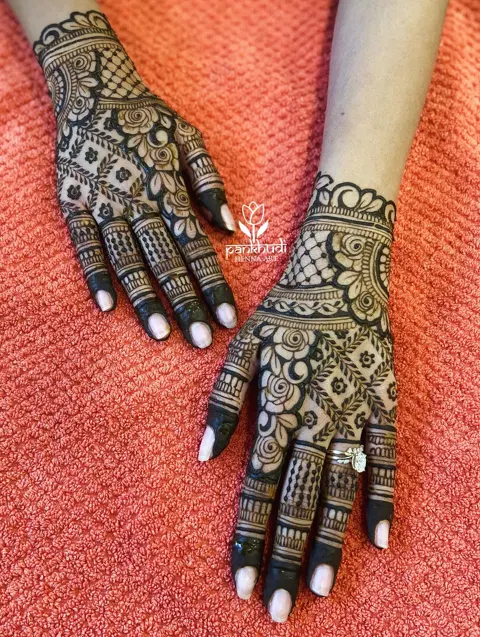
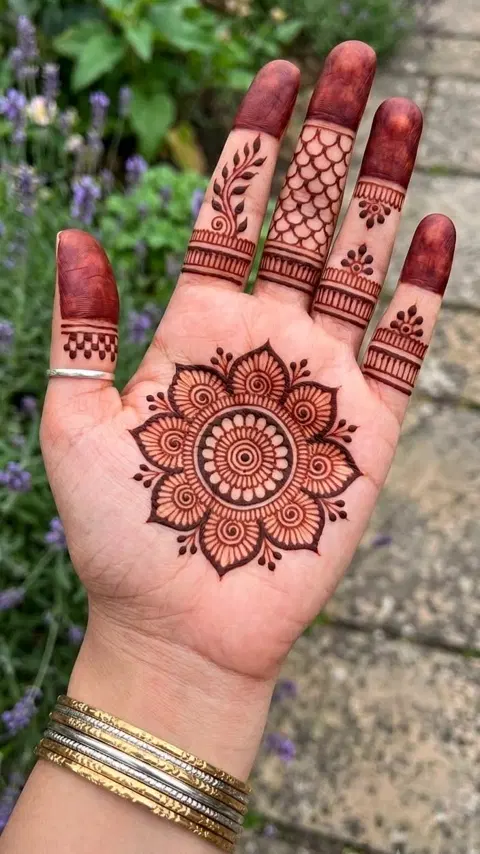
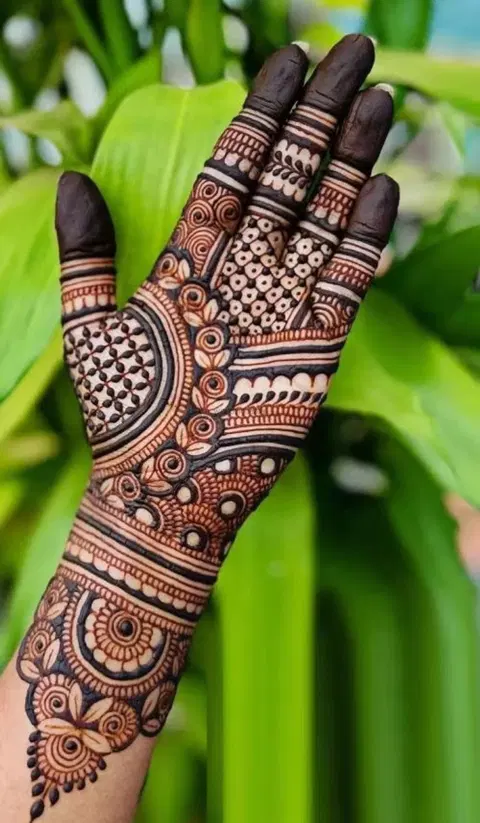
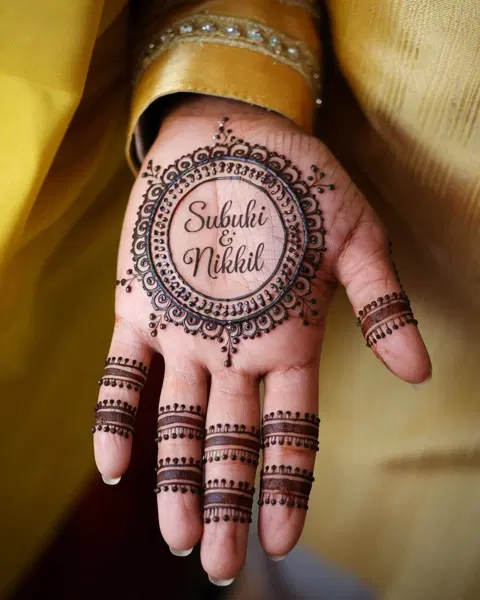
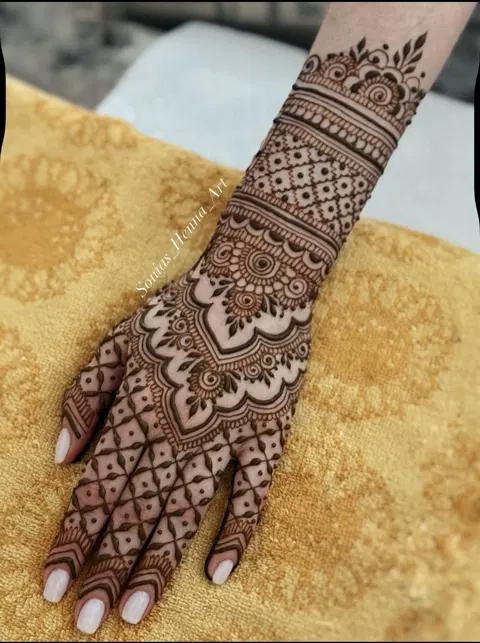
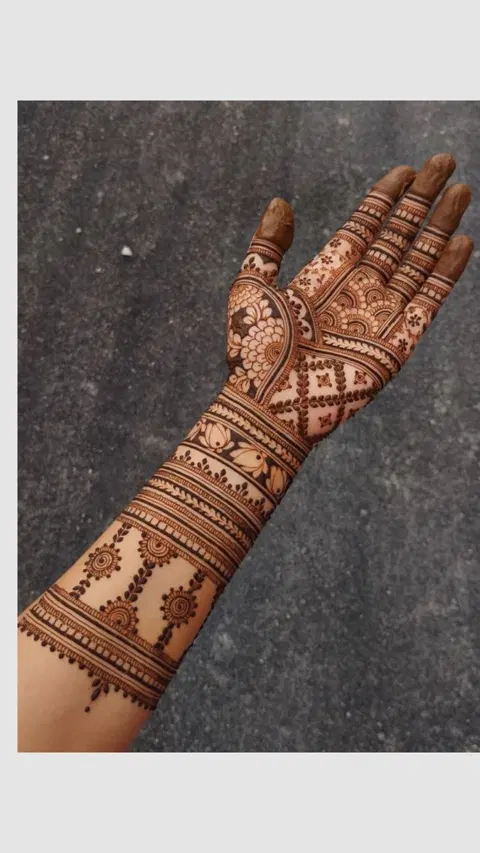
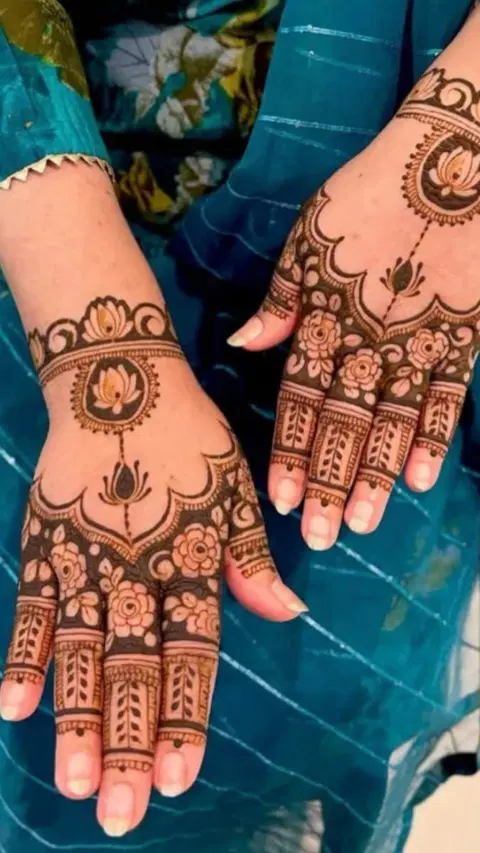
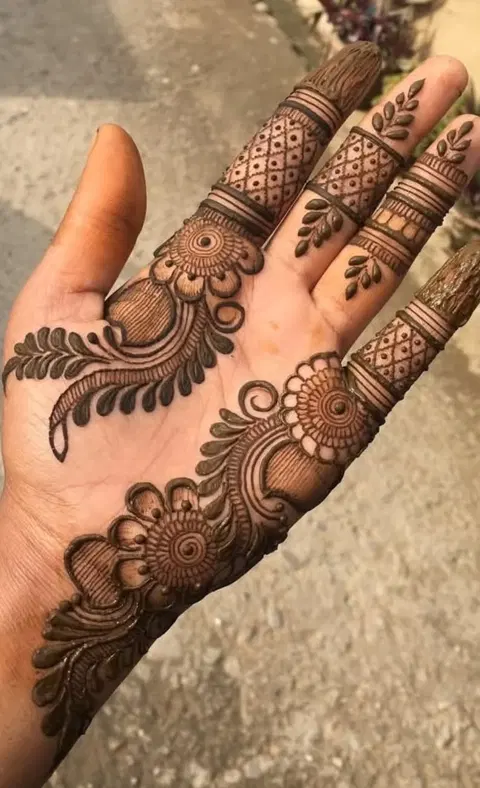
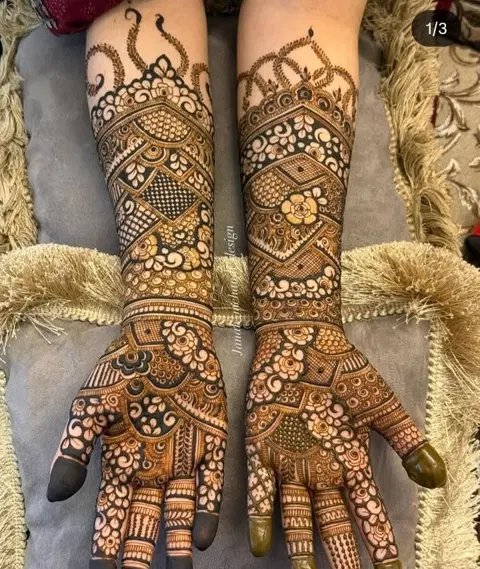
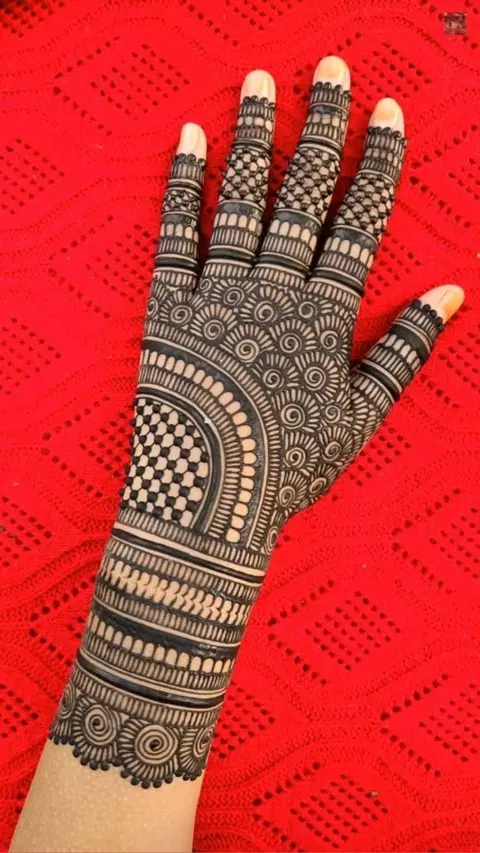
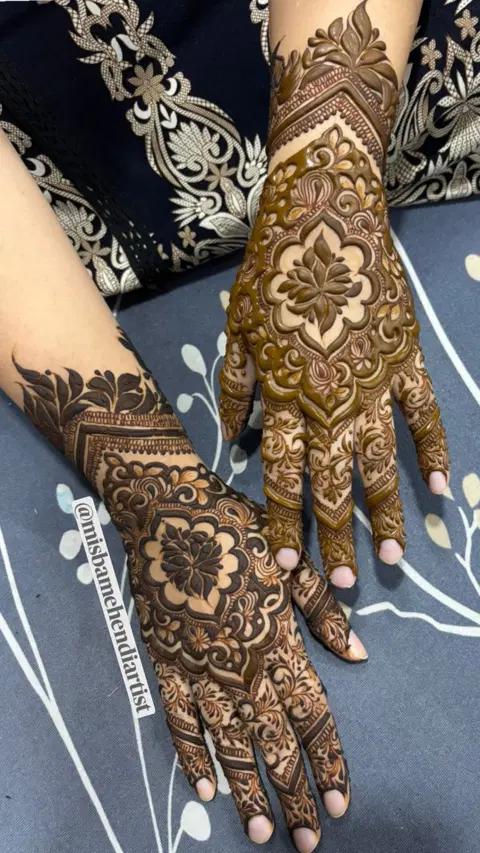
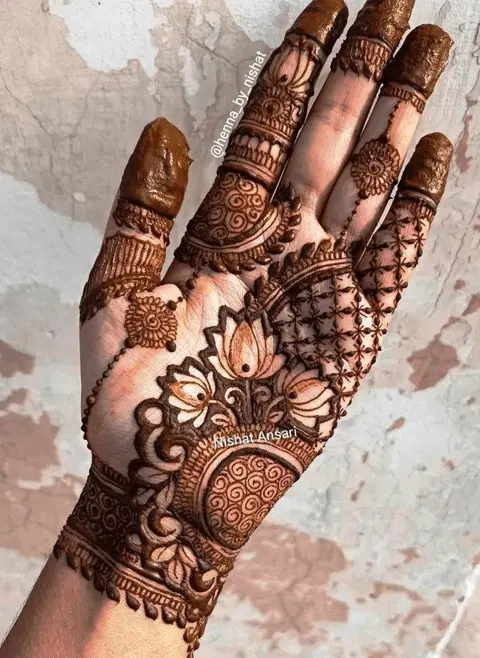

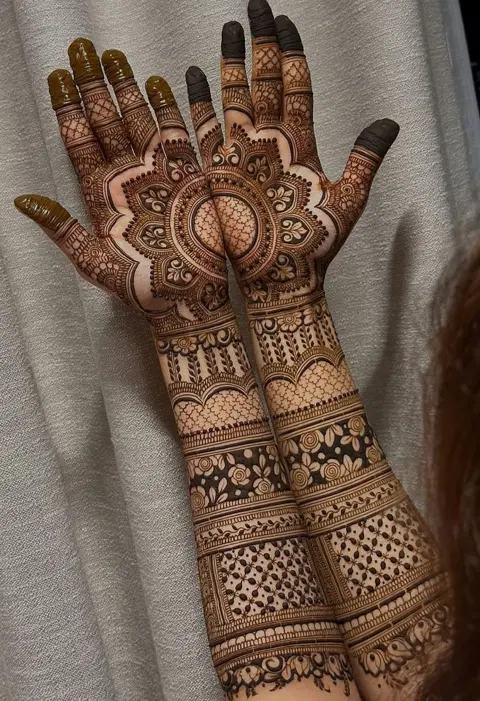
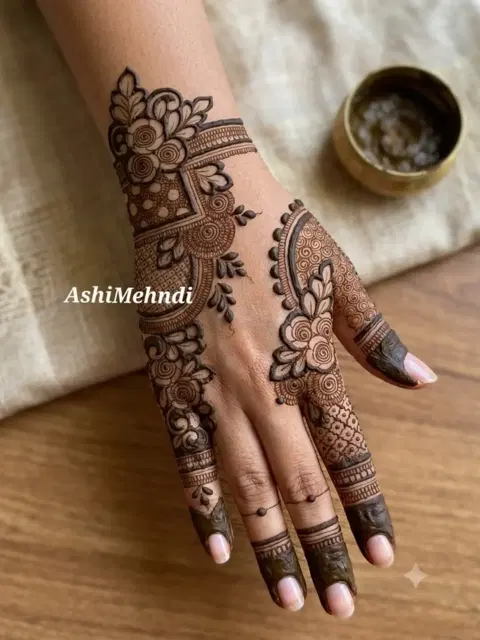
Measured
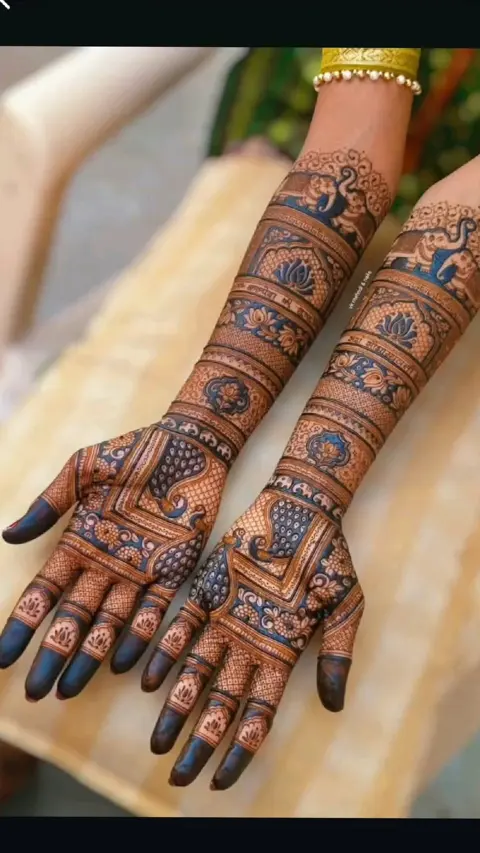
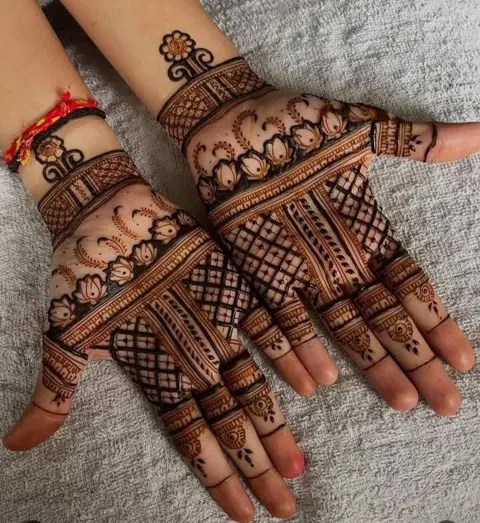
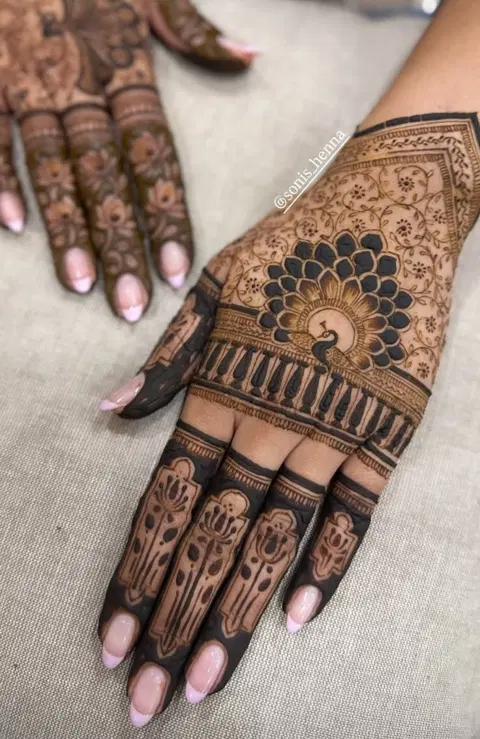
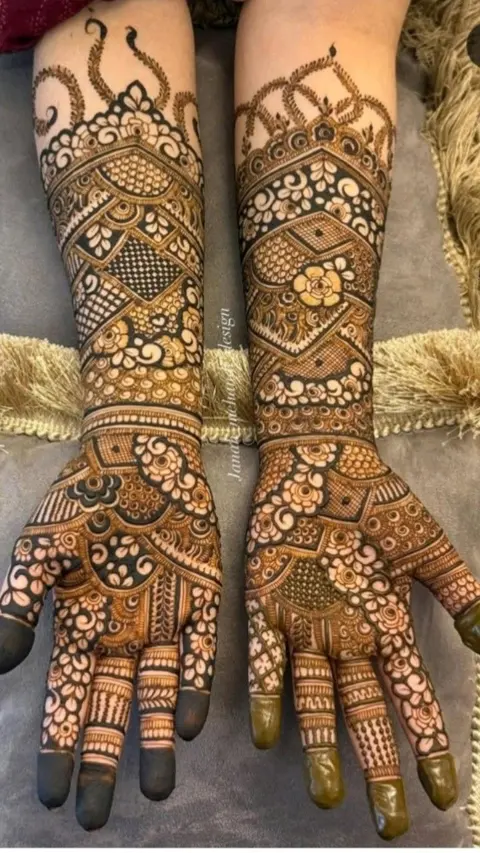
25 mintypical time for a design like these (most take 16–37 min)
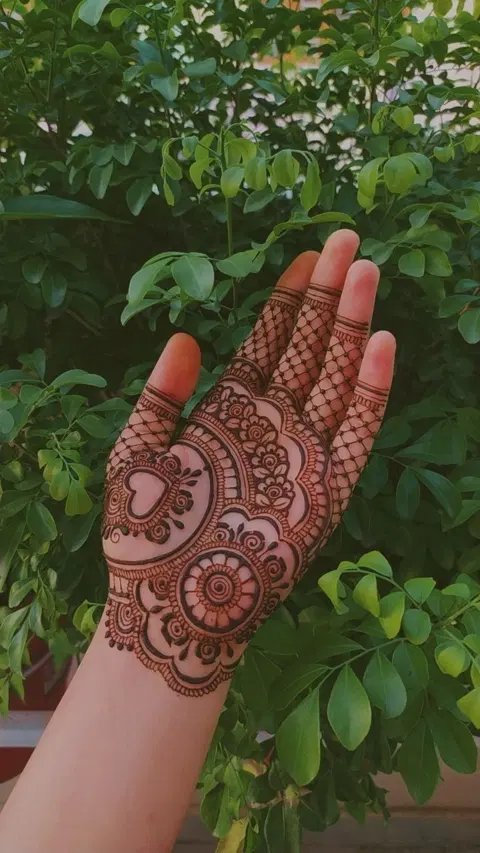
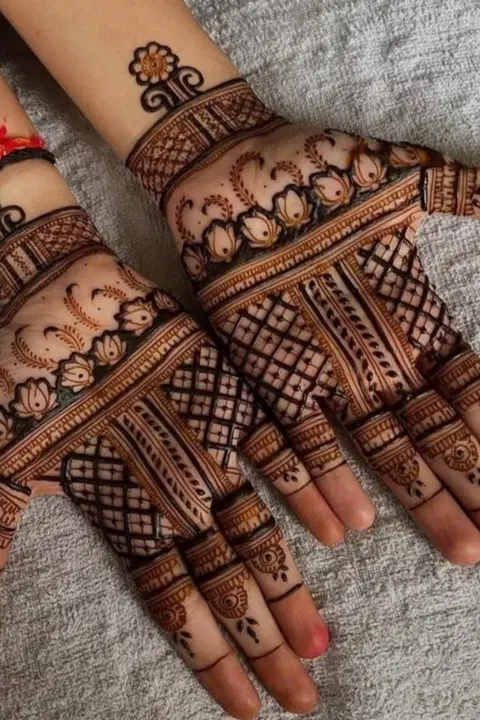
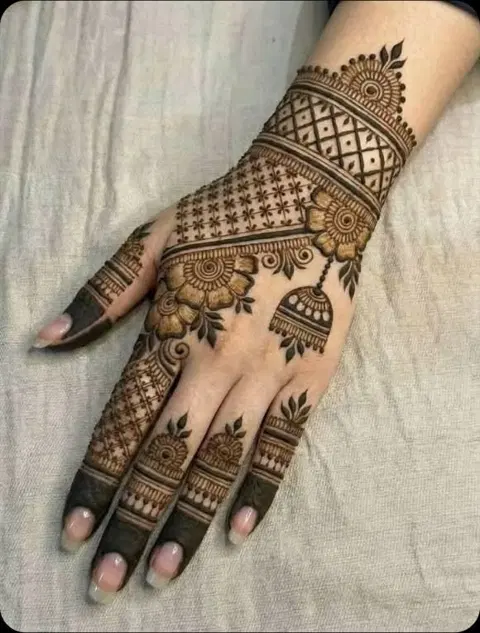
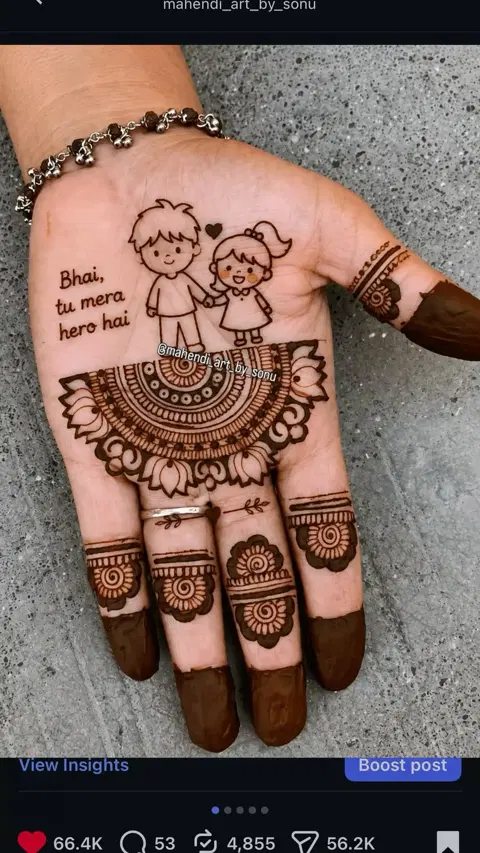
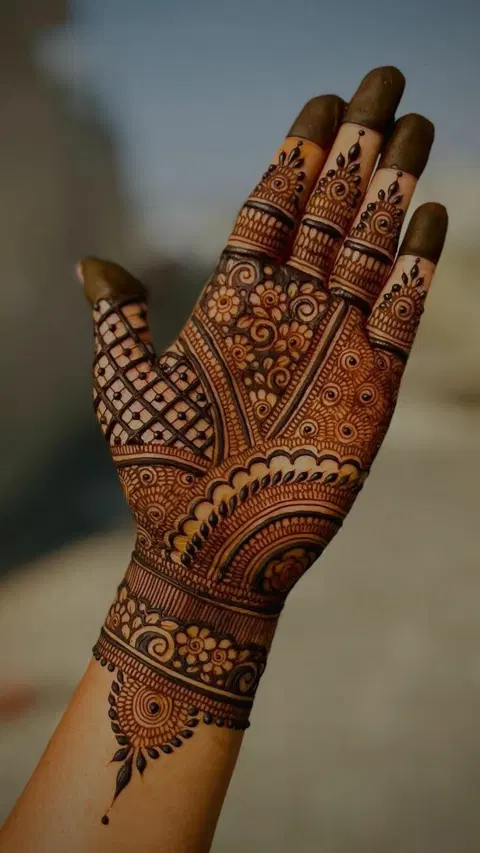
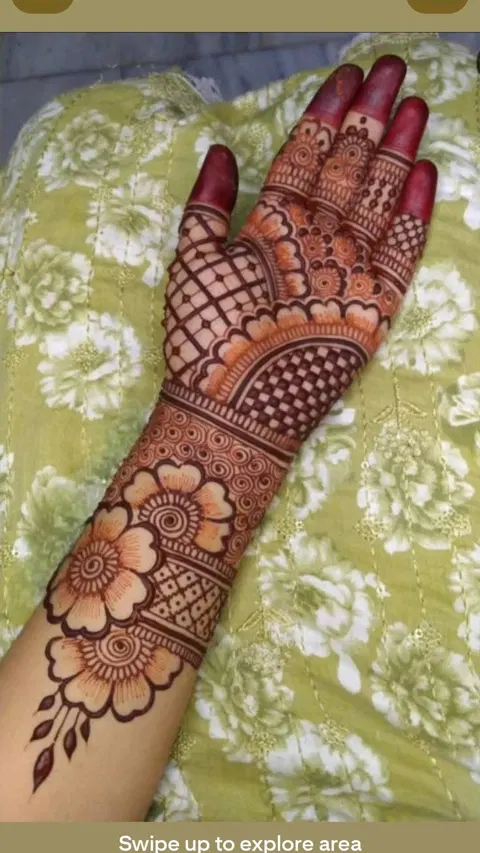
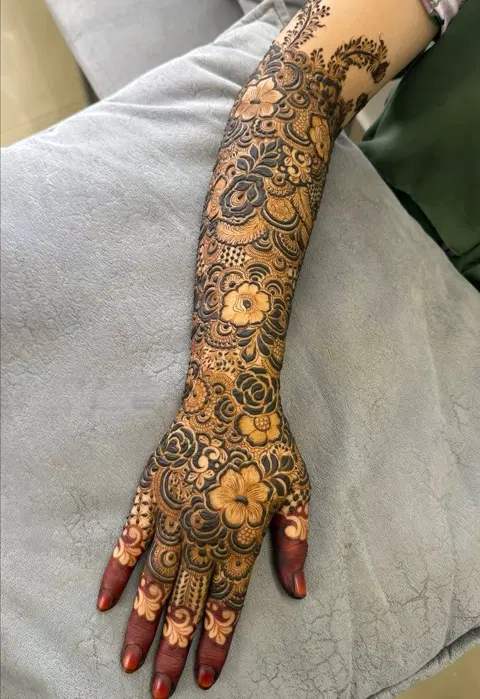
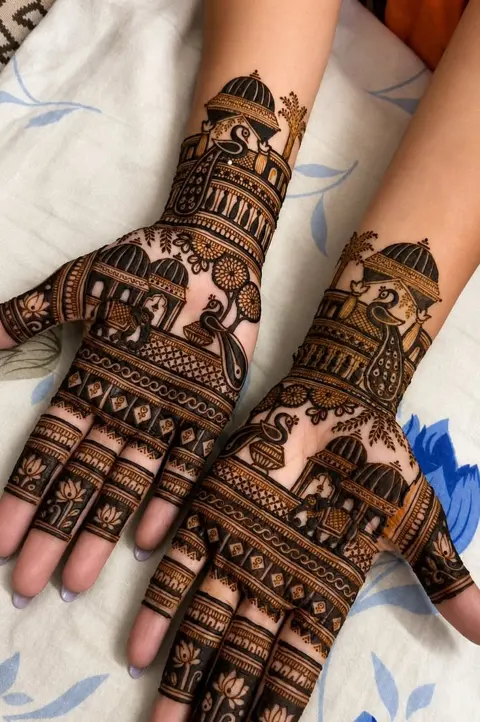
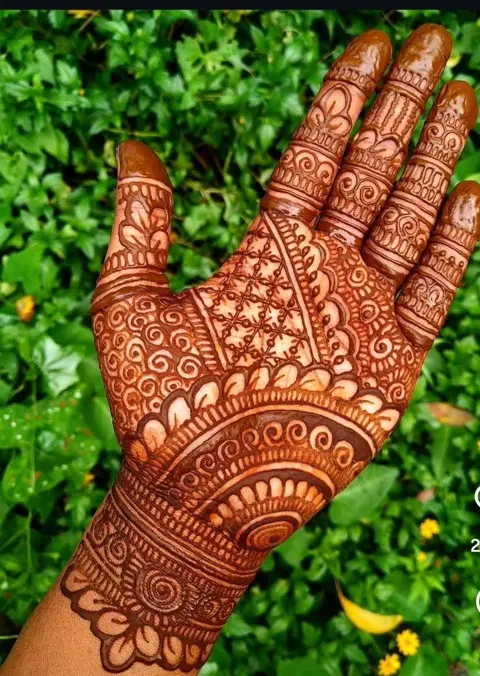
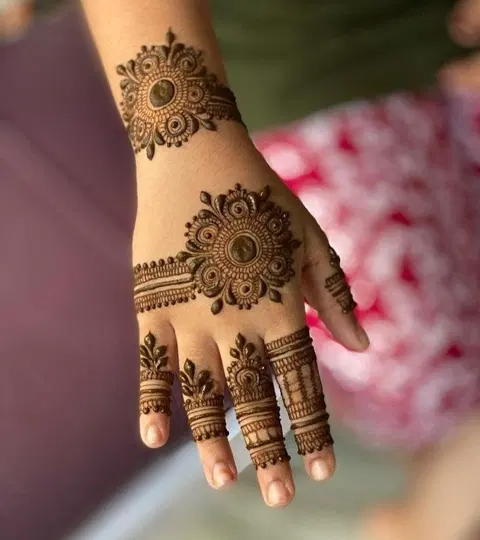
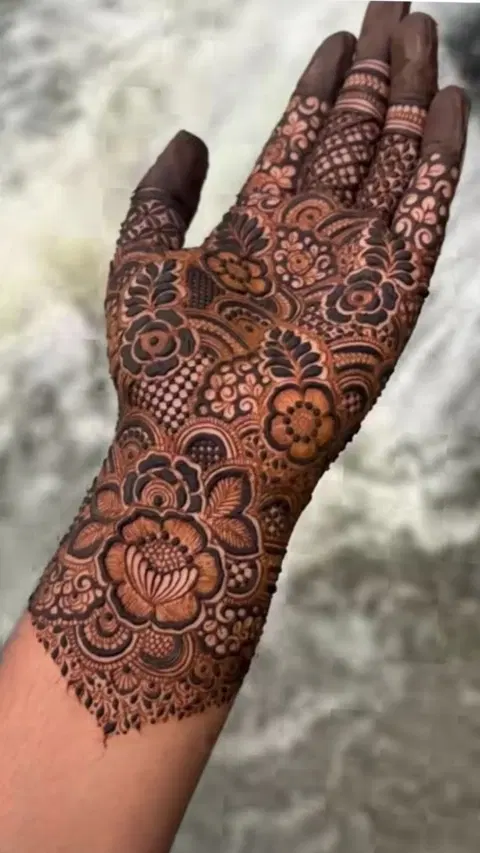
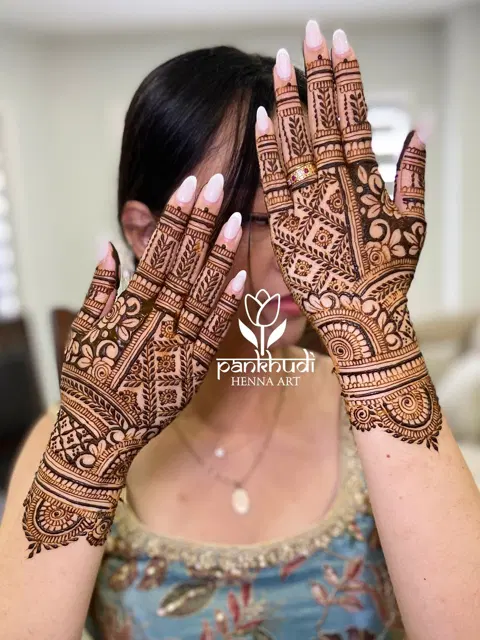
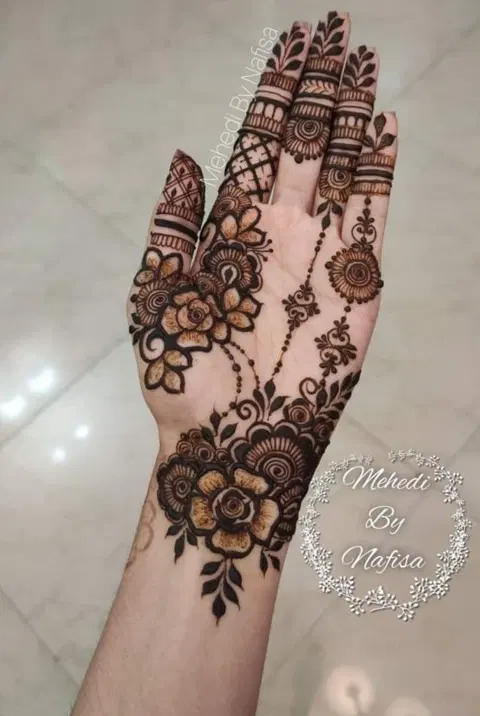
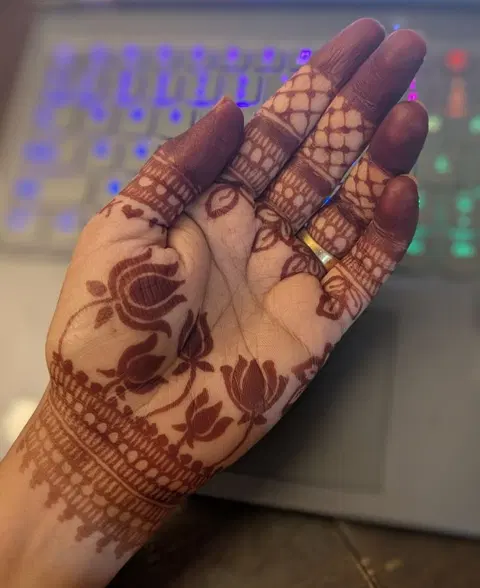
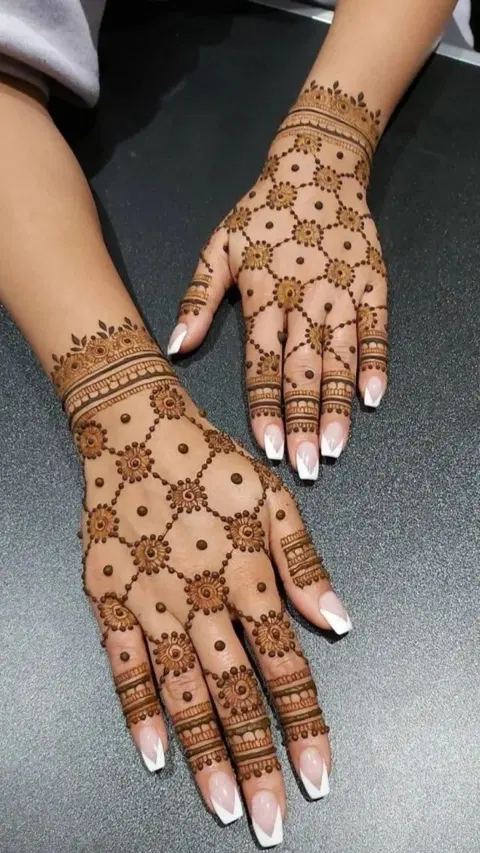
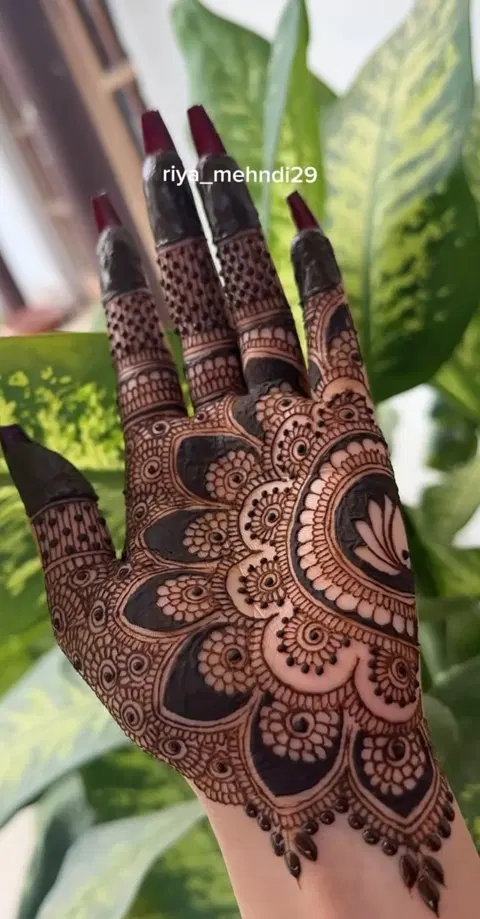
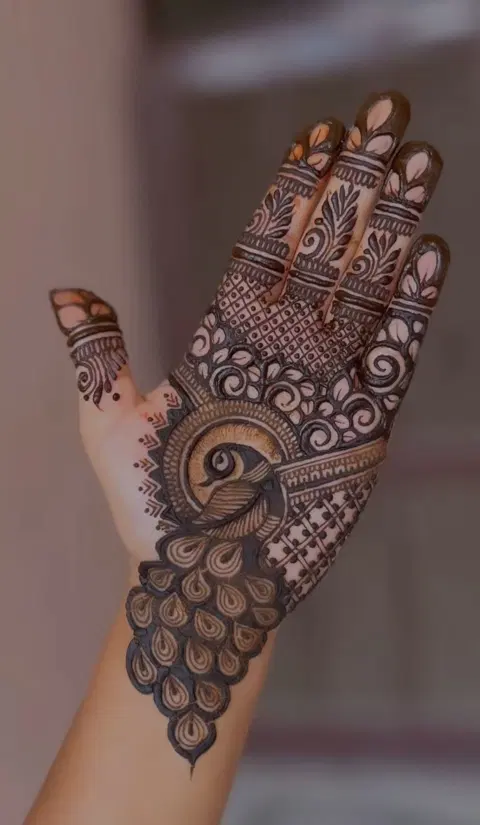
What we measured
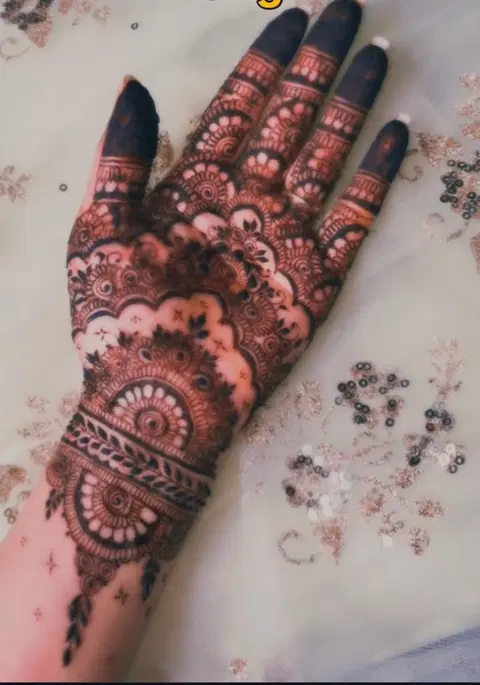
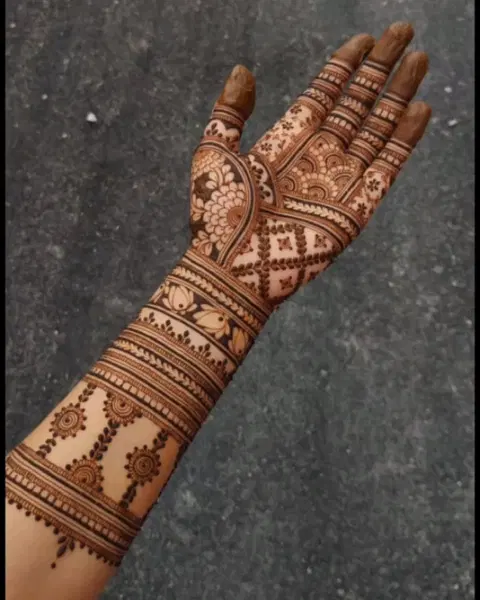
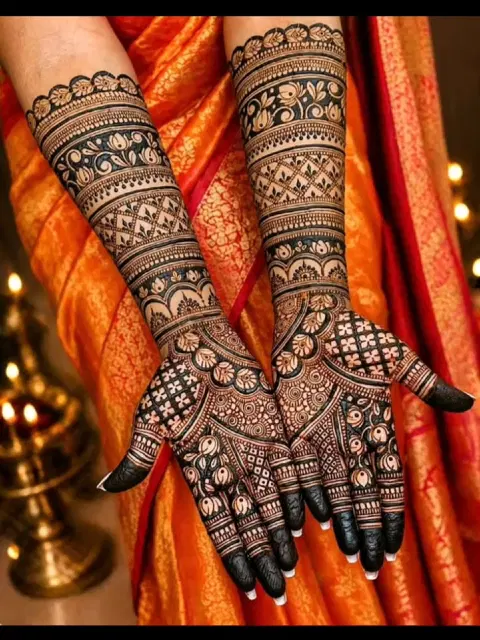
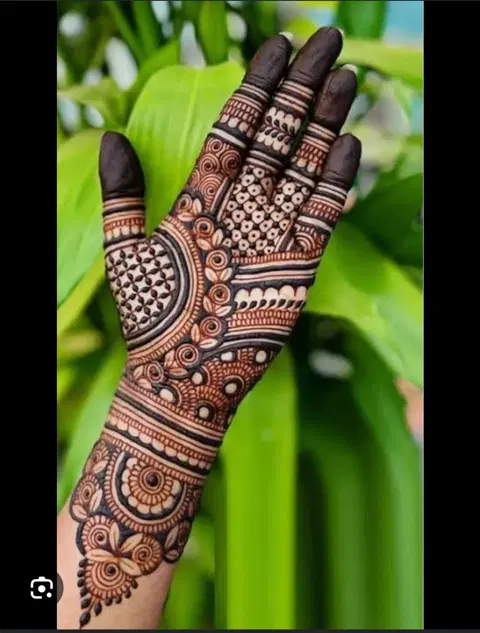
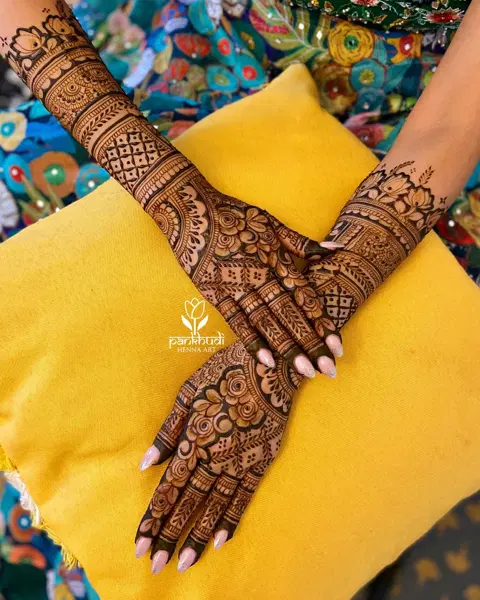
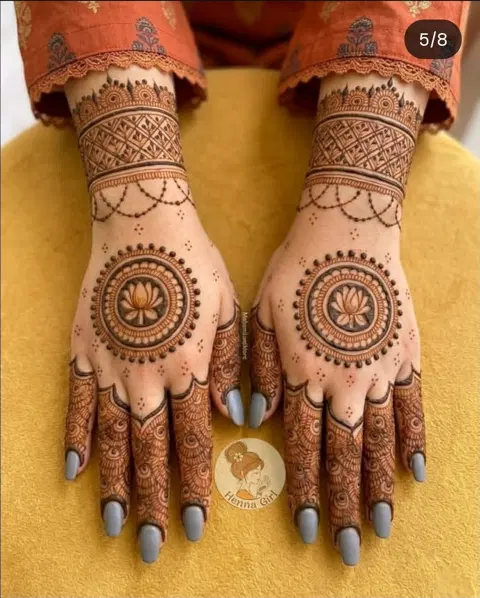
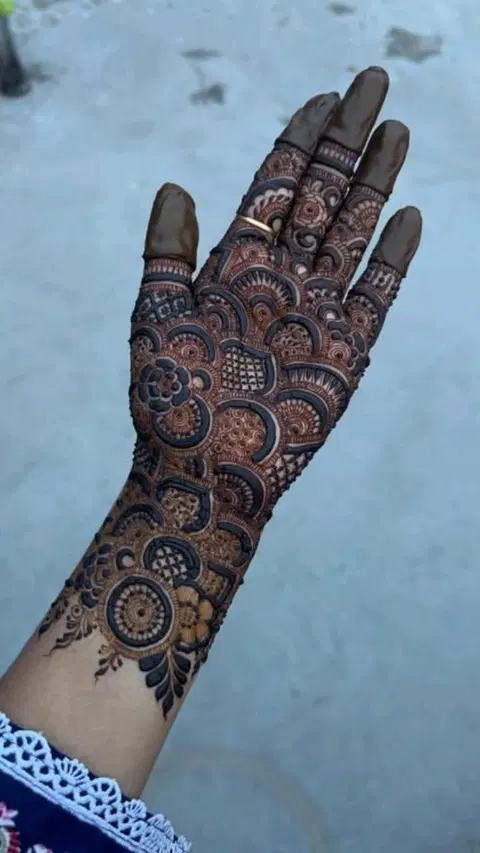
- 36%of the visible skin is inked, on a typical design here
- 2.4 mof henna line drawn in a typical design
- 1.4 mmtypical line width: a fine cone tip
- 25 mintypical time for a design like these (most take 16–37 min)
From 688 photos read by our tracer. Estimates from photos: a guide, not a promise.
Is mehndi safe for children?
Natural henna is generally fine for older children, but do a patch test first and never use black henna. Don't apply henna to babies. Children with G6PD deficiency should avoid henna altogether, because it can cause a serious reaction.
Artists known for kids
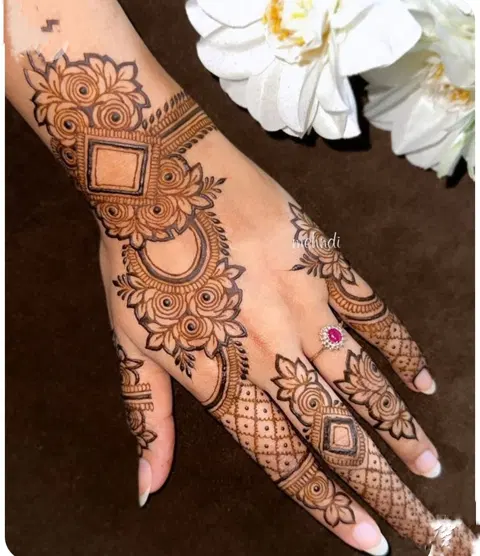 Raj mehandi designer2 designs here · New Delhi
- afreen mehndi artist1 design here · Bengaluru Urban
- Mehndi Elegance1 design here · Agra
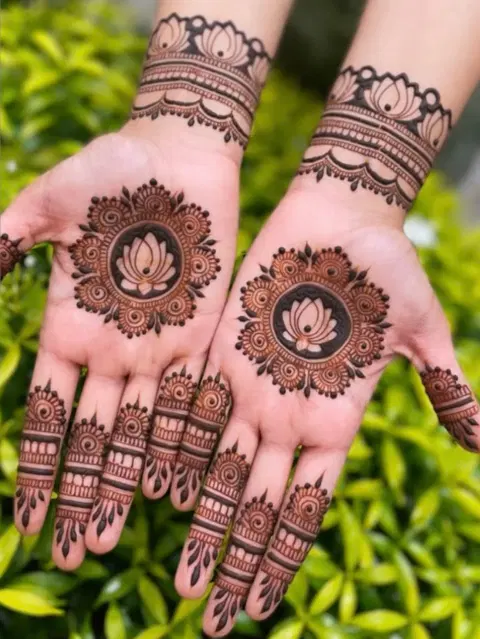 Shagun mehndi artist1 design here · Hyderabad
Learn it
How do I get a darker mehndi colour?
Once the paste is half dry, dab on a little lemon juice mixed with sugar so it stays moist and sticks. Keep the hands warm and leave the paste on overnight. After scraping, avoid water for as long as you can. The colour starts orange and darkens over the next one to two days; it is at its deepest about 48 hours after removal.
Guide
Doing it yourself?
The basics, with designs sorted easiest first.
Read the guide →How long does mehndi last?
Usually one to three weeks. Palms and soles hold colour longest because the skin there is thicker; the back of the hand fades sooner. Frequent washing, scrubbing and sanitiser make it fade faster.
Learn it
For artists
Is your work here?
Your designs are credited to you. Claim your free artist page to add your latest work, your city, timings and prices.
How it works →Is black henna safe?
No. Natural henna never stains black: it goes from orange to brown or deep maroon. "Black henna" usually contains PPD, a hair-dye chemical that can cause blisters, scars and a lifelong allergy. Use only natural henna and do a small patch test a day before a large design.
How can I learn mehndi at home?
Start on paper with a real cone so you learn the pressure. Practise the basic strokes until they are even: dots, straight and curved lines, S-curves, teardrops, petals and leaves. Then combine them into small flowers and paisleys, and only then move to your own hand. The video tutorials on each page are a good next step.